
Article
Taekwondo vs Kickboxing for children: which suits your child?
Both are martial arts. Both are great for kids. But they are built around different goals, and the right choice depends more on your child's temperament than on which discipline is objectively better. Here's how to think about it, from a coach who runs both.
By Andy Griffiths, founder. Updated June 2026.
The short version
At Vortex, both classes are open from age eight. Taekwondo is structured and ceremonial, with formal monthly grading events and belts documented in a system other schools recognise. Kickboxing is sport-focused and fitness-led, with no formal grading events and a faster path through the belts. Sparring is introduced gradually in both classes, with full safety gear and coach supervision throughout. Most children try both before deciding which one to commit to.
Quick reference
Taekwondo
- Structured, ceremonial
- Formal monthly grading events
- Documented in a system other schools recognise
- Roughly 7 to 10 years to black belt
Kickboxing
- Sport-focused, fitness-led
- No formal grading events, no grading fees
- Coach grades up in class when ready
- Roughly 4 to 6 years to black belt
What Taekwondo is built around
At its core, Taekwondo is a traditional martial art with a structured curriculum and ceremony. Monthly gradings are formal events where children demonstrate set techniques, patterns, and self-defence applications to be promoted. Belts are earned through a specific syllabus that everyone follows in order, and the grade your child achieves at Vortex is documented within a system other Taekwondo schools recognise. At Vortex, this is the main class with kids and adults training together. Children who stay with it long enough work toward a black belt over roughly seven to ten years.
What it does well for many kids:
- Builds discipline through ceremony and routine
- Clear, frequent progression markers tied to a specific syllabus
- Develops technique slowly and properly through pattern work
- The belt your child earns is portable, not just a Vortex belt
- The grading day matters to them, which is motivating
- They learn how to work in a structured class environment
What might not suit your child:
- Grading fees apply each time your child enters a formal grading
- Children who want pad work from day one can find the pattern work tedious early on
- Slower path to the milestones some kids want fastest
If Taekwondo sounds like the right fit, the Taekwondo class page has the full detail on structure, gradings, and what to expect.
What Kickboxing is built around
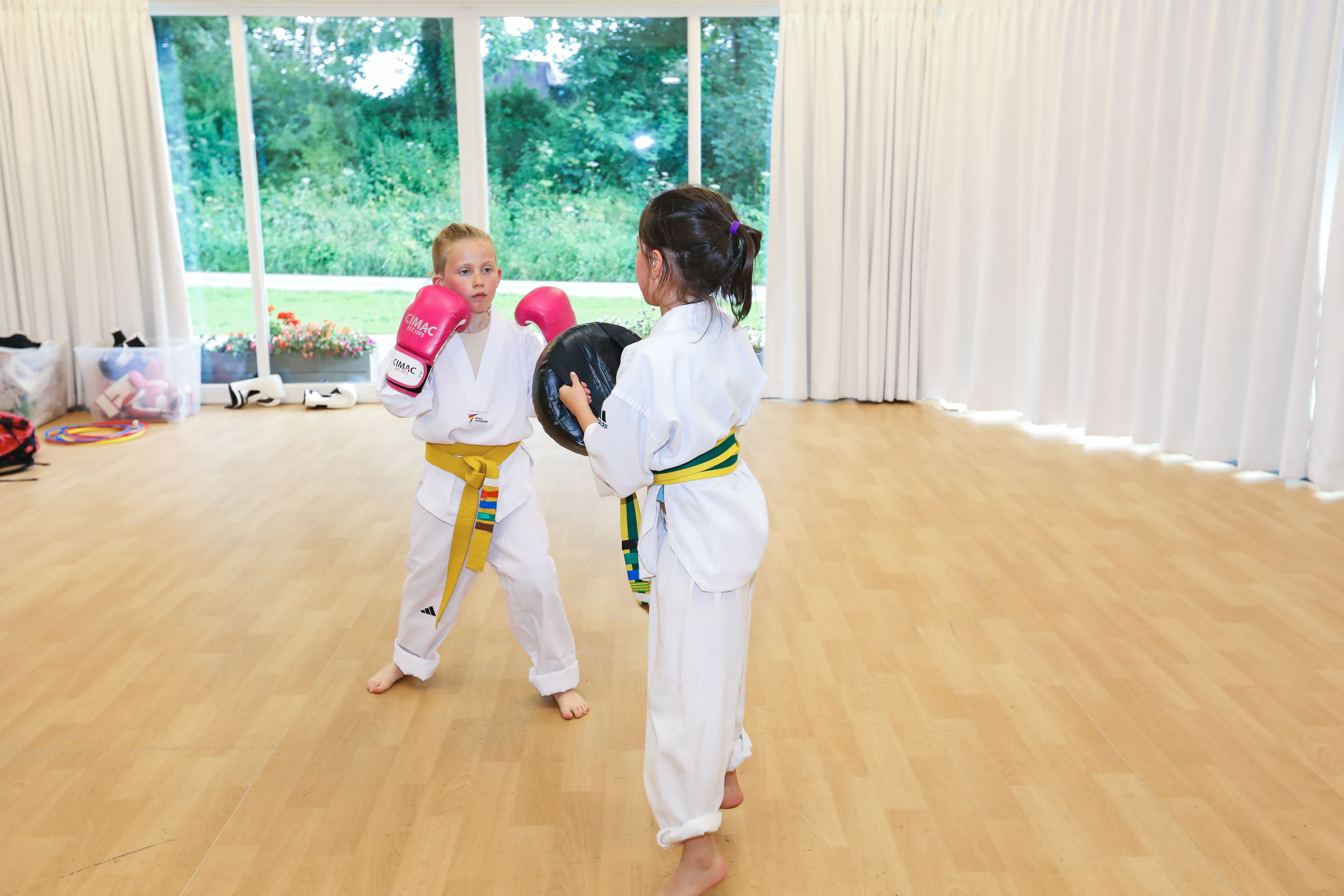
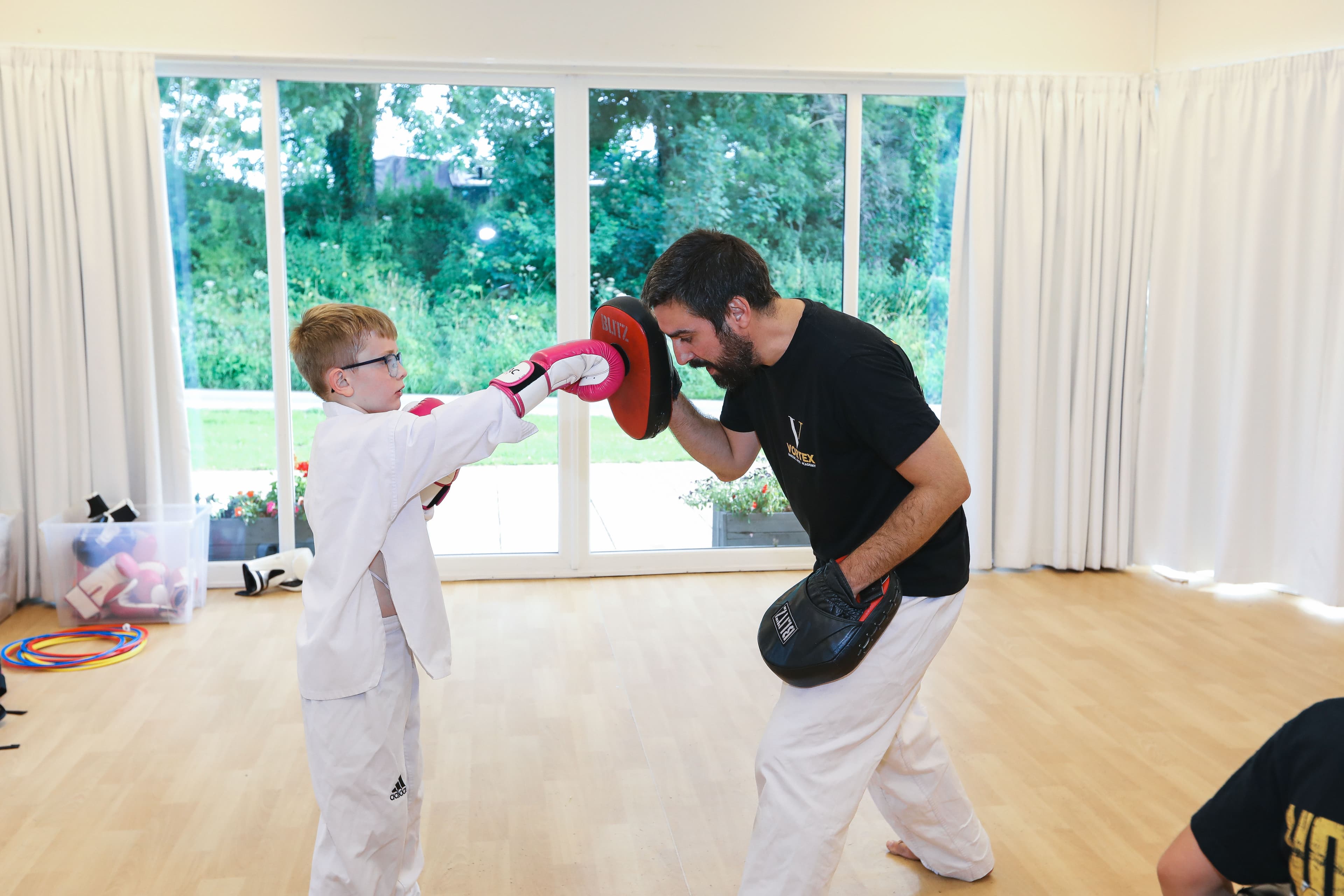
Kickboxing at Vortex is sport-focused. There is still a structured belt curriculum. Children progress through belts toward a black belt the same way they would in any martial art, but there are no formal grading events. The coach assesses readiness in class and promotes children when they meet the criteria, with no grading fee. Lessons centre on pad work, partner drills, and conditioning.
What it does well for many kids:
- Beginner-friendly and immediate: you can throw a punch on day one
- Builds fitness alongside technique
- No grading fees, which keeps the per-year cost lower
- Faster path to black belt, roughly four to six years
- Children who are sporty or practically minded tend to love it
What might not suit your child:
- Less ceremony, fewer milestones to celebrate
- No formal grading days for kids who'd find that motivating
- Less of the discipline-through-tradition that some parents specifically want
If Kickboxing sounds like the right fit, the Kickboxing class page has the full detail on structure, sessions, and what to expect.
How to actually decide
Honestly, the best way is to let your child try both. At Vortex, most children have done both at some point and gravitate toward whichever suits them. A few rough indicators help.
Your child might prefer Taekwondo if:
- They like routine and ceremony
- They get excited about belts and progression markers
- They thrive on structured pattern work
- They respond well to doing this exact movement, in this exact order
Your child might prefer Kickboxing if:
- They want hands-on pad work from day one
- They are fitness-driven or sporty
- They aren't bothered about ceremony
- They would rather progress at their own pace without formal grading events
At Vortex, many children do both at the same time. Thursday evenings run the kids classes back to back, so attending both in one trip is straightforward.
Common parent questions
Can they actually do both at the same time?
Yes. At Vortex we have children who attend both regularly. Sometimes one becomes their main focus and the other is supplementary. Sometimes they keep both running for years. The disciplines complement each other well.
What about sparring? When does it actually start?
In both classes, sparring is introduced in stages, never all at once. Children begin with body-contact only from the third grading, wearing full safety gear including head guards, body protectors, and shin guards. From the fifth belt onward, light controlled contact to the head is gradually introduced within that same gear. Every session is supervised by the coach, and we don't put a child into sparring until they're physically and technically ready for that stage.
Which is better for self-defence?
Both teach useful techniques. Taekwondo includes set self-defence applications as part of the syllabus. Kickboxing is more pad and partner work, less syllabus-defined self-defence. Honest answer: real self-defence is more about awareness and avoidance than about which discipline a child studies. Either gives a child more confidence in their body, which is the practical bit.
Which costs less over time?
Kickboxing has no grading fees, which makes the per-year cost lower. Class membership fees are the same across both. Taekwondo families pay grading fees for each formal grading their child enters.
Can they switch later?
Yes. At Vortex, many children start with one and add the other when curiosity strikes. They do not have to commit to one or the other from day one.
What about for shy children?
Both work well. Kickboxing tends to be slightly lower-pressure at the start because there are no formal grading events to perform at. That said, a shy child often blossoms in Taekwondo too once they earn their first stripe.
Still unsure if your child is even old enough to start? Read our companion article on when can my child start martial arts.
Try one.
Or try both.
The first session at either class is free.
We'll provide a uniform if they decide to stay. No contracts, no joining fee. The best way to choose is to let them try.