Cadets, Lancaster, Ages 7+
Cadets Taekwondo Classes in Lancaster
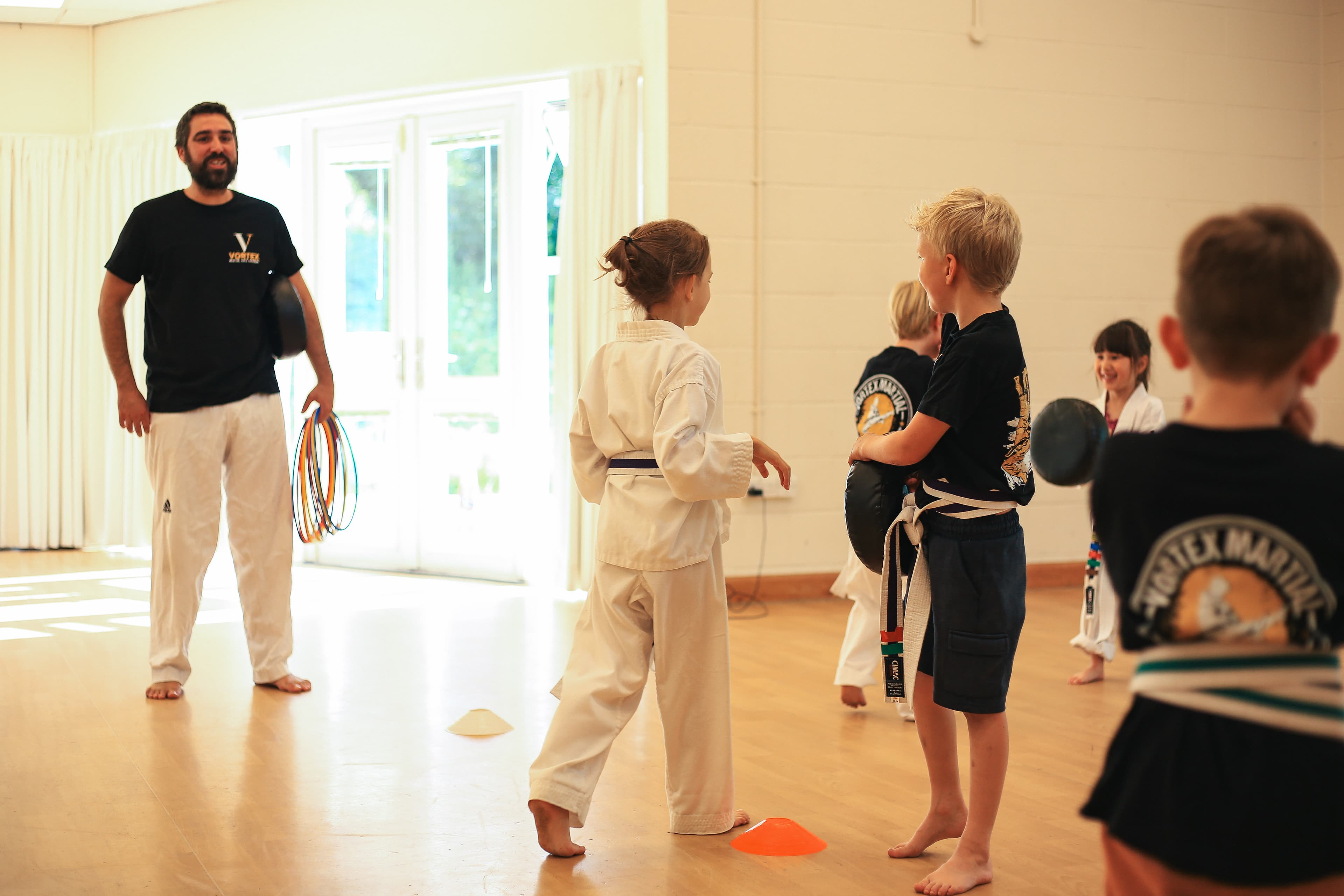
Same Taekwondo, taught without sparring. Smaller class, more games, more individual coaching time. First class free.
Cadets is one of two ways to train Taekwondo at Vortex. The other is the main Taekwondo class. Same syllabus, same belts, same grading path. Many of our members train in both, depending on what they need that week.
See the timetable →First class free. Free uniform when you join.
Find your route in
Who Cadets is for
Cadets is a training preference, not a class apart. Same syllabus and belts as the main Taekwondo class. Here are the most common reasons members choose Cadets sessions.
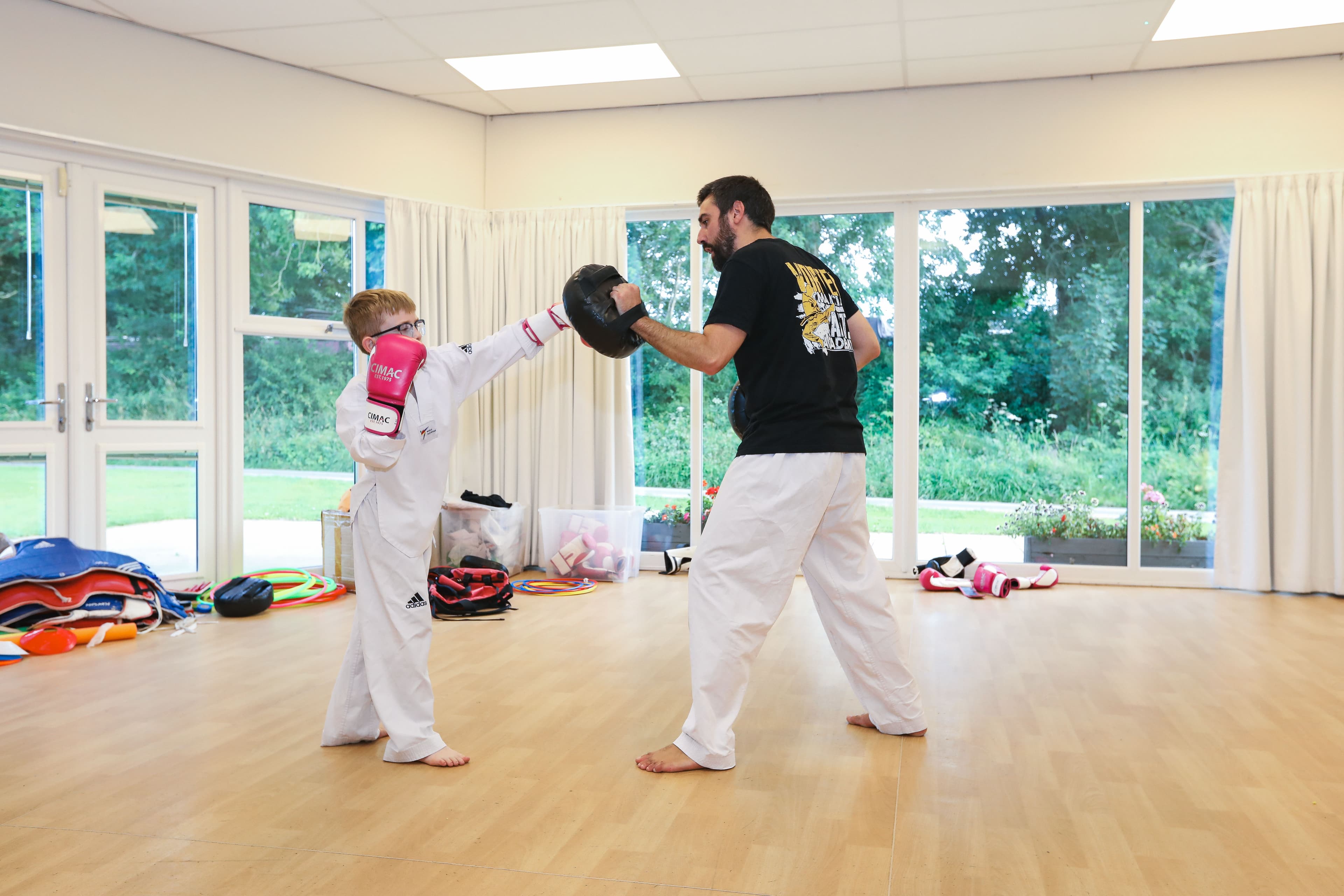
For kids stepping up from Dragons
For the child who has outgrown the Dragons format and wants the Taekwondo syllabus in a smaller, gentler setting. Cadets keeps the games and individual attention your child knows from Dragons, with the full Taekwondo syllabus built in. As they grow in confidence, they can start adding main Taekwondo sessions alongside Cadets, or stay in Cadets as long as they prefer.
Book a Cadets trial →Coming from Dragons (ages 4-7)? Cadets is the natural next step.
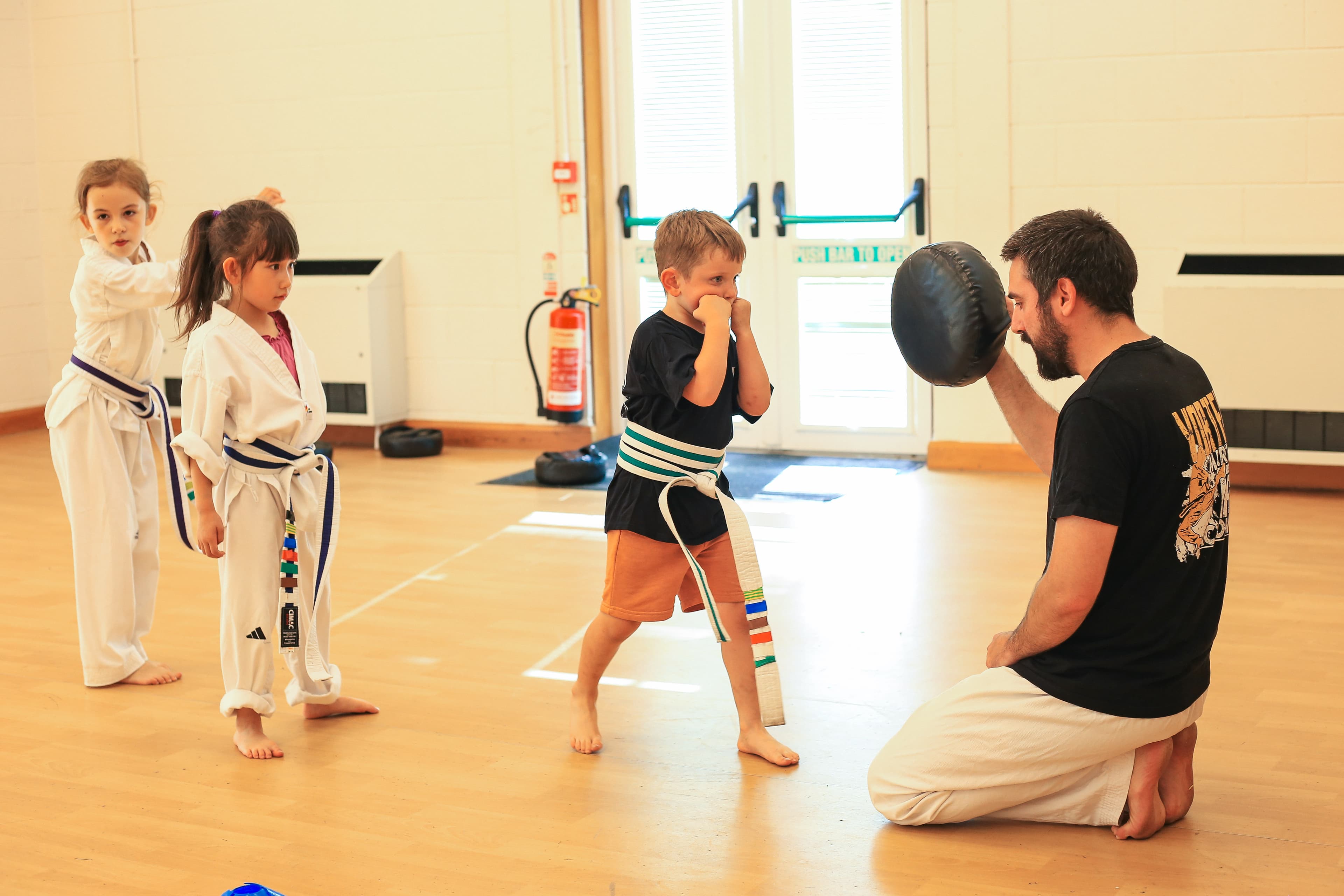
For new starters not ready for contact yet
For the child who wants martial arts but not the sparring side. Cadets sessions are non-contact: pad work, technique, drills, and games. Some children stay in Cadets indefinitely and never spar. Others start adding Taekwondo sessions when they feel ready. The choice stays with the student.
Book a Cadets trial →Also useful for: higher belt students who want extra individual coaching time. The smaller Cadets sessions mean more attention per student, which is why some experienced members attend Cadets in the run-up to gradings or when they want focused work on a specific technique.
The essentials
What you need to know
Where & when
Ages
What to wear
Your first class
Class structure
What a class actually looks like
Same structure as the main Taekwondo class, with more games and more individual coaching.
Every class follows the same four phases as the main Taekwondo class: warm-up, foundations, application, cool-down. What is different in Cadets is the pace and the focus. More games, more individual attention from the coach, and no contact sparring.
That said, every class has shape.
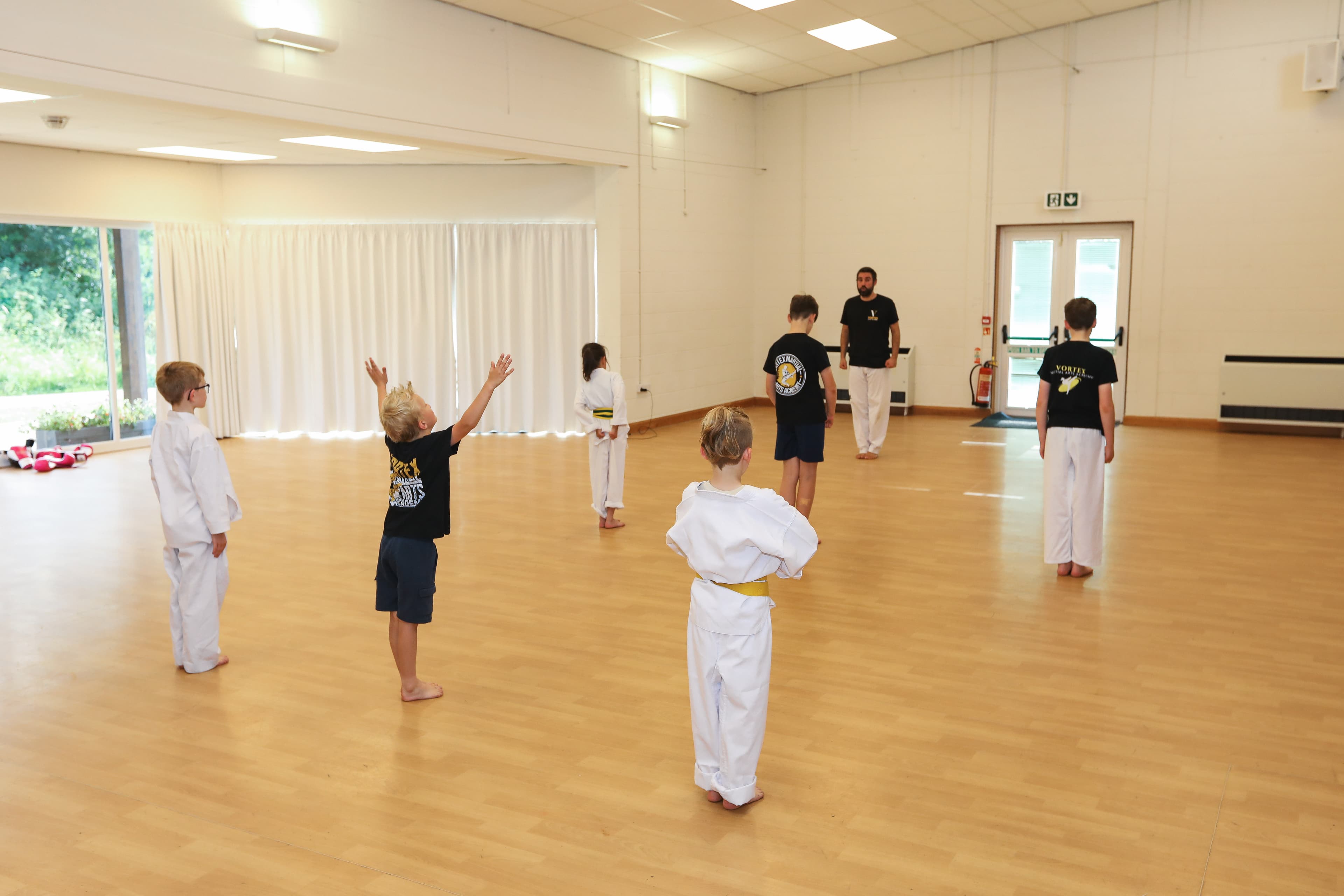
Warm-up.
Mobility, footwork, dynamic movement, often in game form. Cadets warm-ups are built to feel like fun while doing real preparation work.
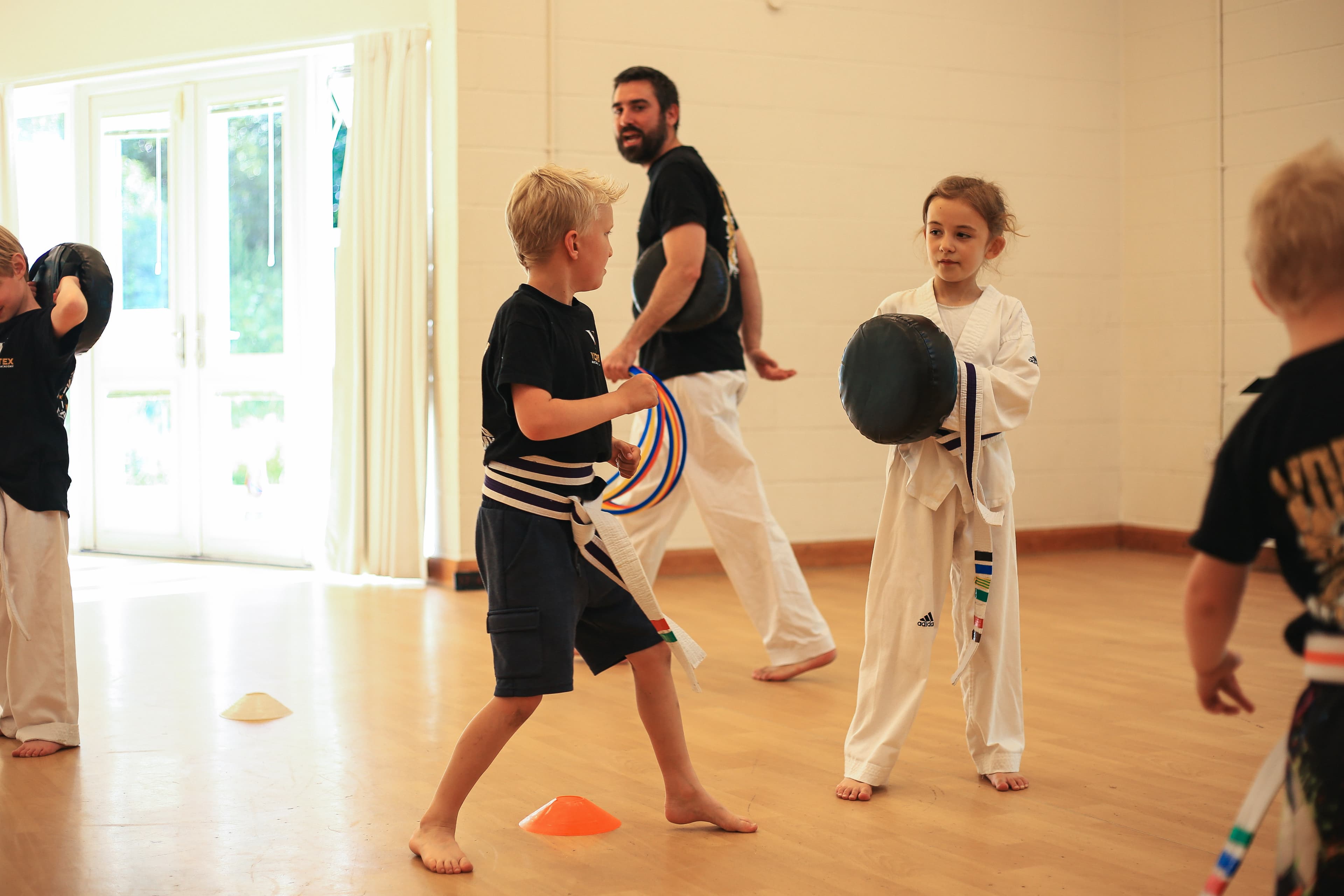
Foundations.
Technique drilling, broken into small steps. Stances, kicks, hands, blocks. Often introduced through games and partner activities. The slow careful work that grows into belt-level competence.
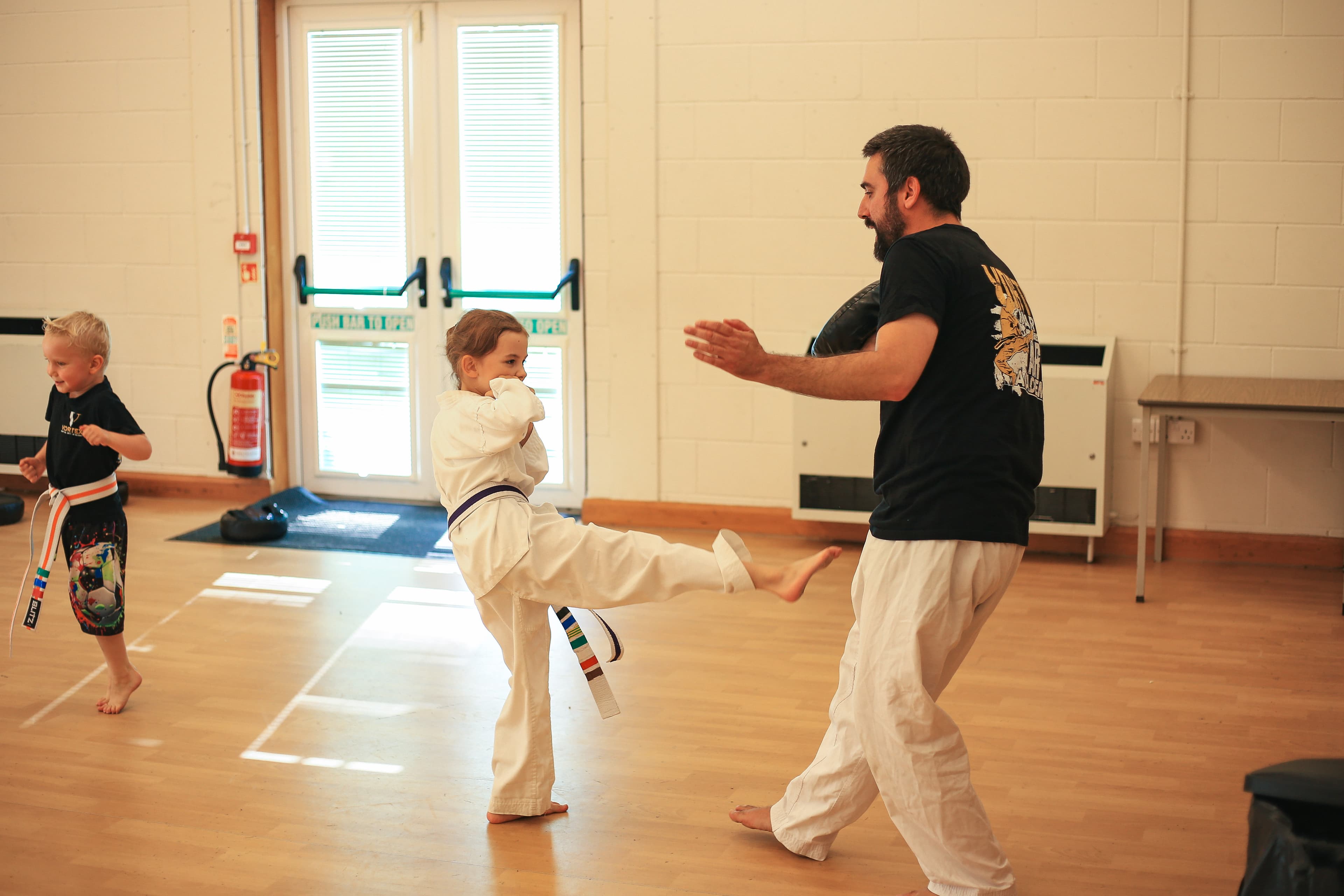
Application.
Pad work, combinations, controlled partner drills. Cadets is non-contact throughout: students hit pads, not each other. Members who want to add sparring to their training do so in the main Taekwondo class, where sparring is part of the syllabus.
Cool-down.
A calm ending. The class settles before going home so kids leave the hall in the right state rather than wound up.
Smaller class size means more individual coaching time per student. That is the practical difference between training in Cadets and training in the main Taekwondo class.
What you will learn
The skills you will build
Six skills the Taekwondo syllabus builds. The same as the main class, just taught with more individual coaching time.
Kicks
Front, side, roundhouse, turning. Built individually then combined. Each kick taught at whatever speed each student needs.
Hands
Punches, strikes, blocks. Drawn from the Freestyle Taekwondo system. Cleanly drilled, broken into small steps.
Combinations
Putting kicks, hands, and movement together. Reading and responding to what the coach calls.
Self-defence
Age-appropriate releases, escapes, and awareness drills. The self-defence elements of the syllabus, scaled for the age group.
Patterns and forms
Set sequences that teach control, balance, and memory. A core part of the Taekwondo syllabus and grading.
Listening and class skills
Following instruction, working with partners, recognising when to focus. The bits that make every other skill possible.
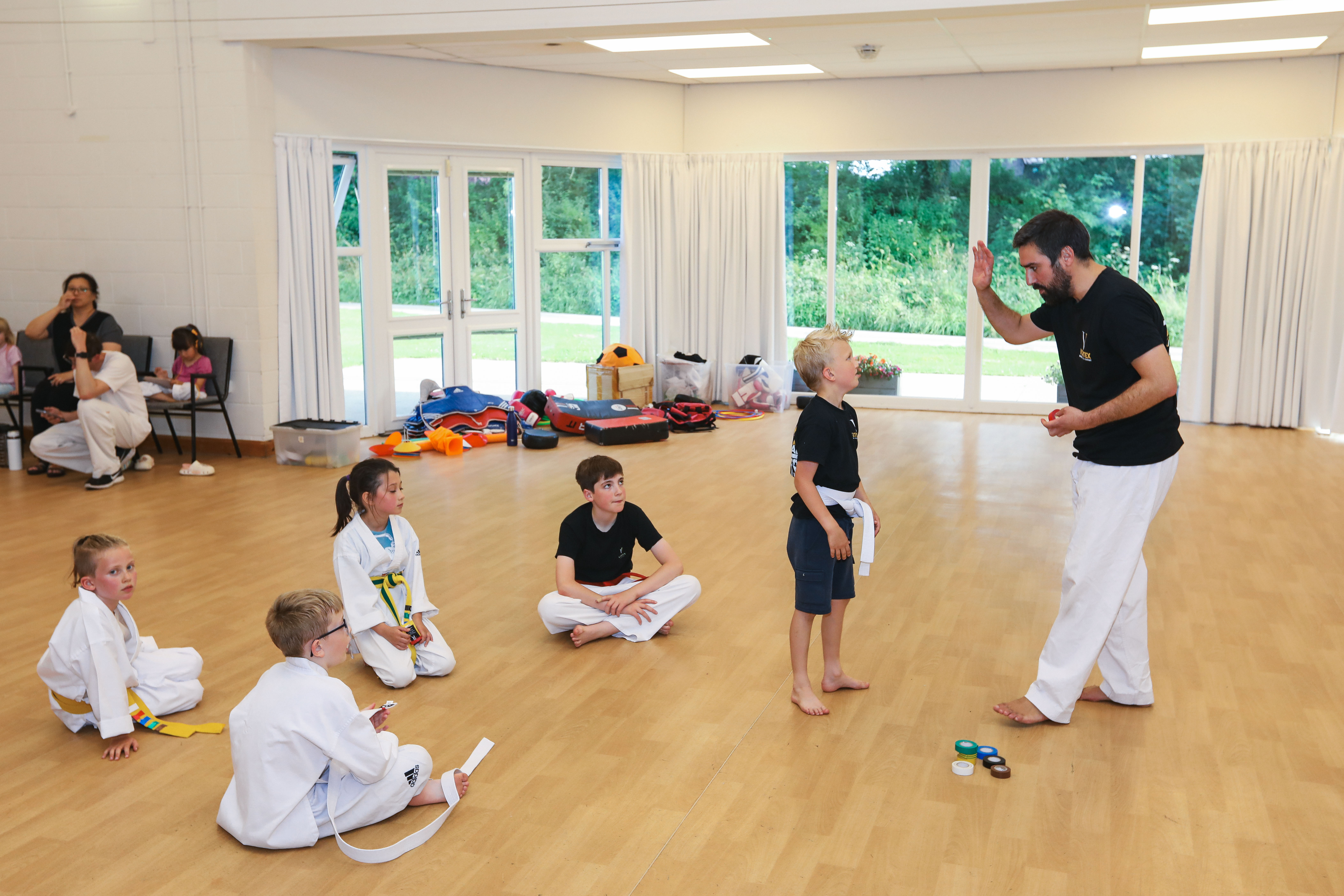
Every one of these is on the grading syllabus. Students build them in order, at their pace, with the coach's attention.
Your progression
Your path through the belts
One belt path, one syllabus, one school.
Cadets and Taekwondo share the same belt journey. The gradings are not separate, the syllabus is not separate, the belt path is not separate. Cadets sessions and Taekwondo sessions are two ways of training the same content. Members move between them based on what they need.
Your first year
Building foundations
Monthly gradings. Minimum 12 classes between each grade. Students typically move through several belt levels in their first year. The early belts are about learning the format, the foundations, and building the habit of consistent training.
Through the middle belts
Building depth
As students progress, the syllabus gets more demanding. Some members stay in Cadets exclusively for the smaller, non-contact format. Others start splitting time between Cadets and the main Taekwondo class to add sparring to their training. There is no required transition. The choice stays with the member.
Black belt and beyond
Giving back
At the higher grades, training shifts. Older students start contributing to the class: demonstrating techniques, supporting newer students alongside the coach. The black belt reflects what you can do, how you carry yourself in class, and your part in the community.
Cadets and Taekwondo members grade together. The belt is the same belt. The path is the same path. Where you train is your choice.
What you're signing up to
Why train here
What you are choosing when you choose Vortex for Cadets.
Two decades of coaching
Andy started teaching at 15 and has been coaching ever since. Hundreds of students taught by name. Double figures in black belts produced. The method has been refined over nearly twenty years of working out what each student actually needs.
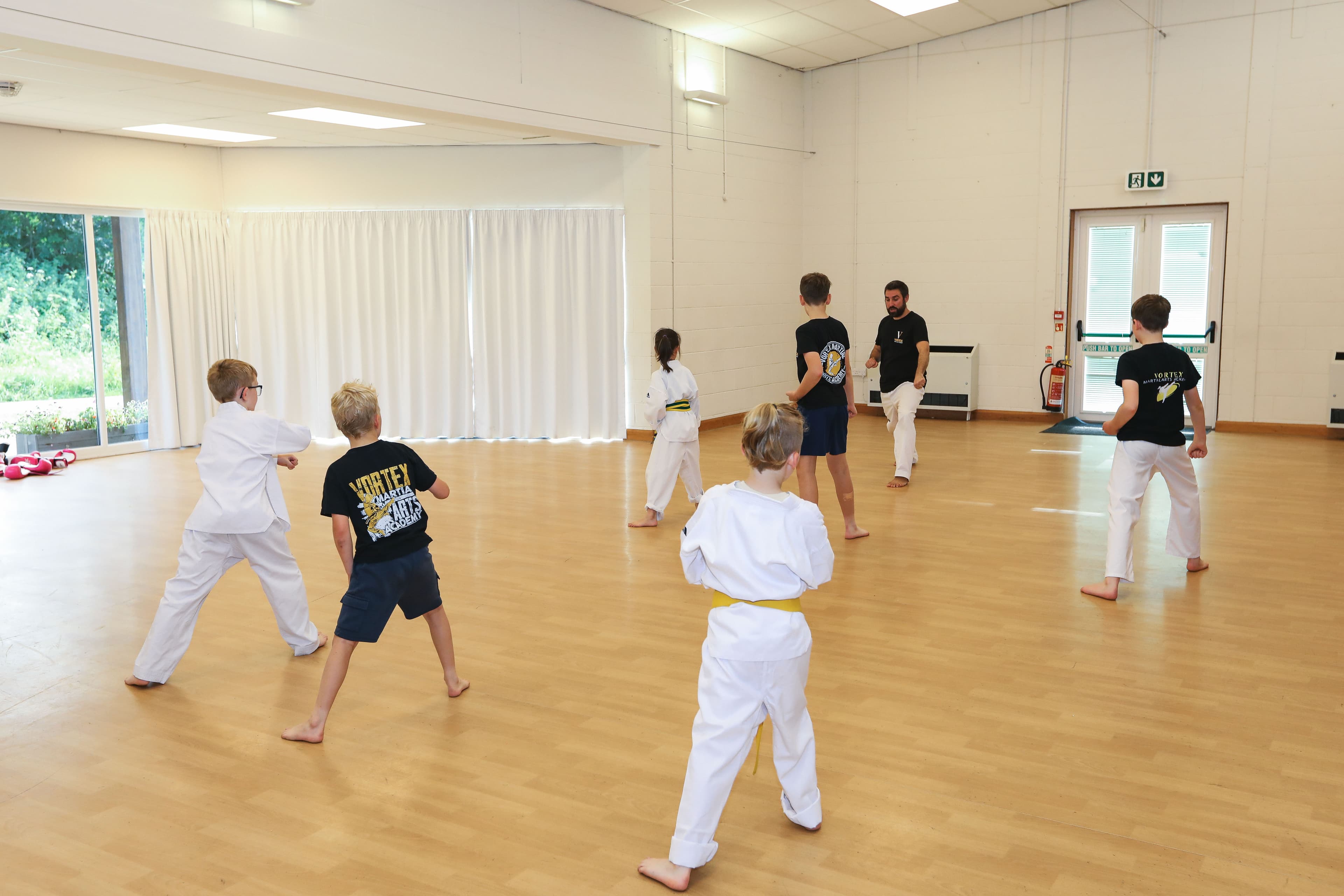
A class environment built around your child
Every class is supervised, structured, and run to the same coaching standards. New starters are not thrown into the deep end. Confidence builds before challenge does. Most kids who walk in nervous loosen up within a few classes.
Recognised coaching standards
Recognised by the British Martial Arts and Boxing Association (BMABA), an independent UK martial arts governing body. Documented syllabus, grading structure, and coaching standards. Anyone teaching the kids classes is DBS-checked and first aid trained.
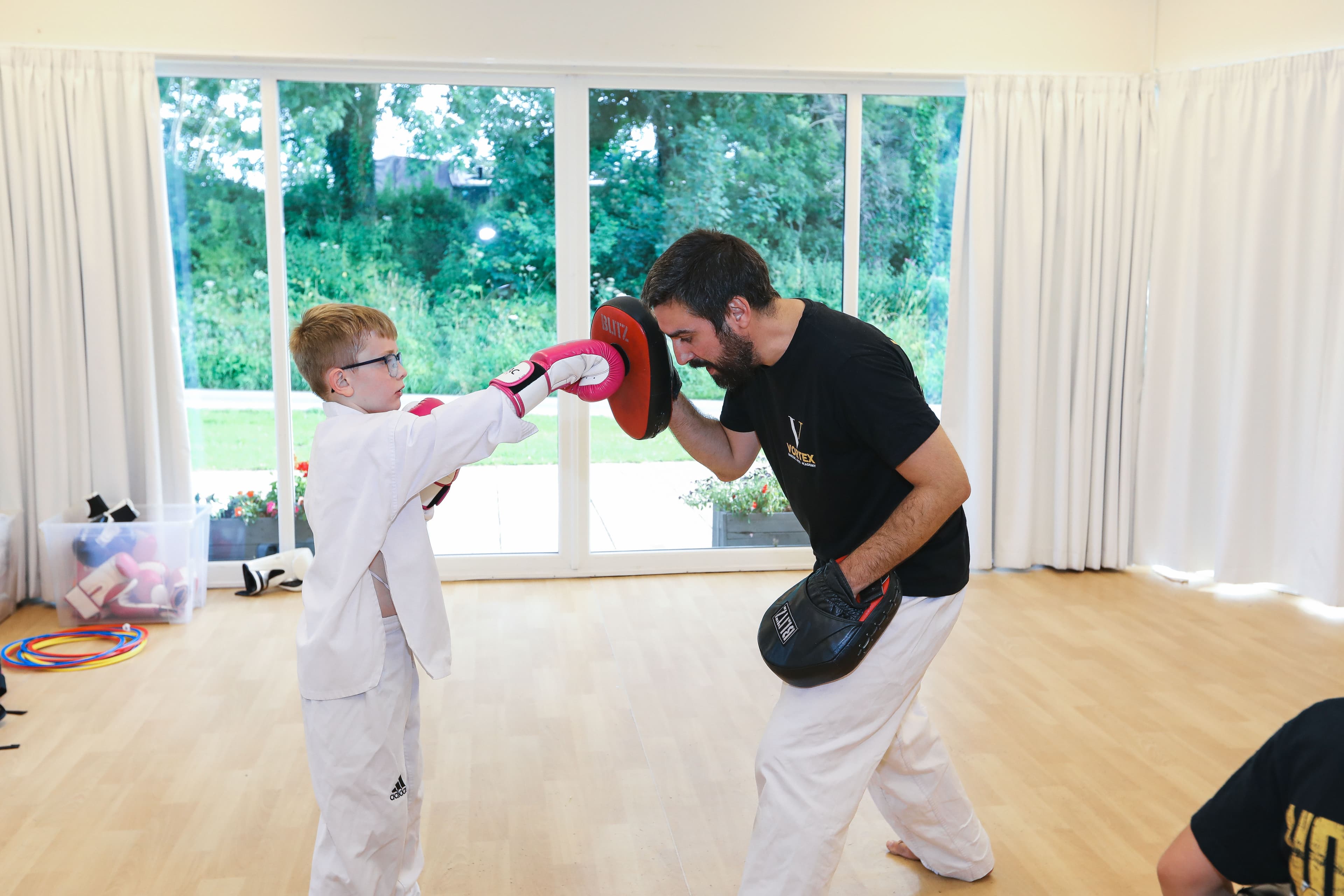
Individual attention, every class
Cadets is smaller than the main Taekwondo class, which means more individual coaching time per student. Stances corrected. Kicks adjusted. Syllabus questions answered. That is also why some higher belt members attend Cadets sessions in the run-up to gradings, where the extra attention can make the difference.
Before you ask
Common questions
Reviews
What parents say
From parents whose kids train here.
“Andy is an excellent Taekwondo instructor. He's very good with kids. My daughter really enjoys his class.”
Krishna W., parent
Google review
First class.
Free.
One class. No commitment. See if it is the right fit.
Your child trains alongside everyone else. No sparring. No pressure. Parents welcome to watch from the side of the hall. If they want to keep training, the first uniform is on us. No joining fee. No contracts.